
What is a cataract?
A cataract is clouding of the natural lens inside the eye. It usually develops gradually and can make vision seem hazy, blurred or less vivid. Cataracts are common with age, but an eye examination is needed to distinguish them from other causes of vision change.
Cataract symptoms: glare, night driving and faded colours
Common cataract symptoms include gradually blurred or cloudy vision, discomfort or sensitivity in bright light, halos around lights, and difficulty seeing at night. Colours may look faded or washed out. Some people notice that their glasses prescription needs changing more often than before.
Symptoms can affect activities differently from person to person. Bright headlights, glare from the sun, reading, recognising faces or driving after dark may become more difficult. These symptoms can also have other causes, so they do not confirm a cataract by themselves. Arrange an eye examination if you notice a gradual change in vision or increasing glare.
How an NHS cataract referral works
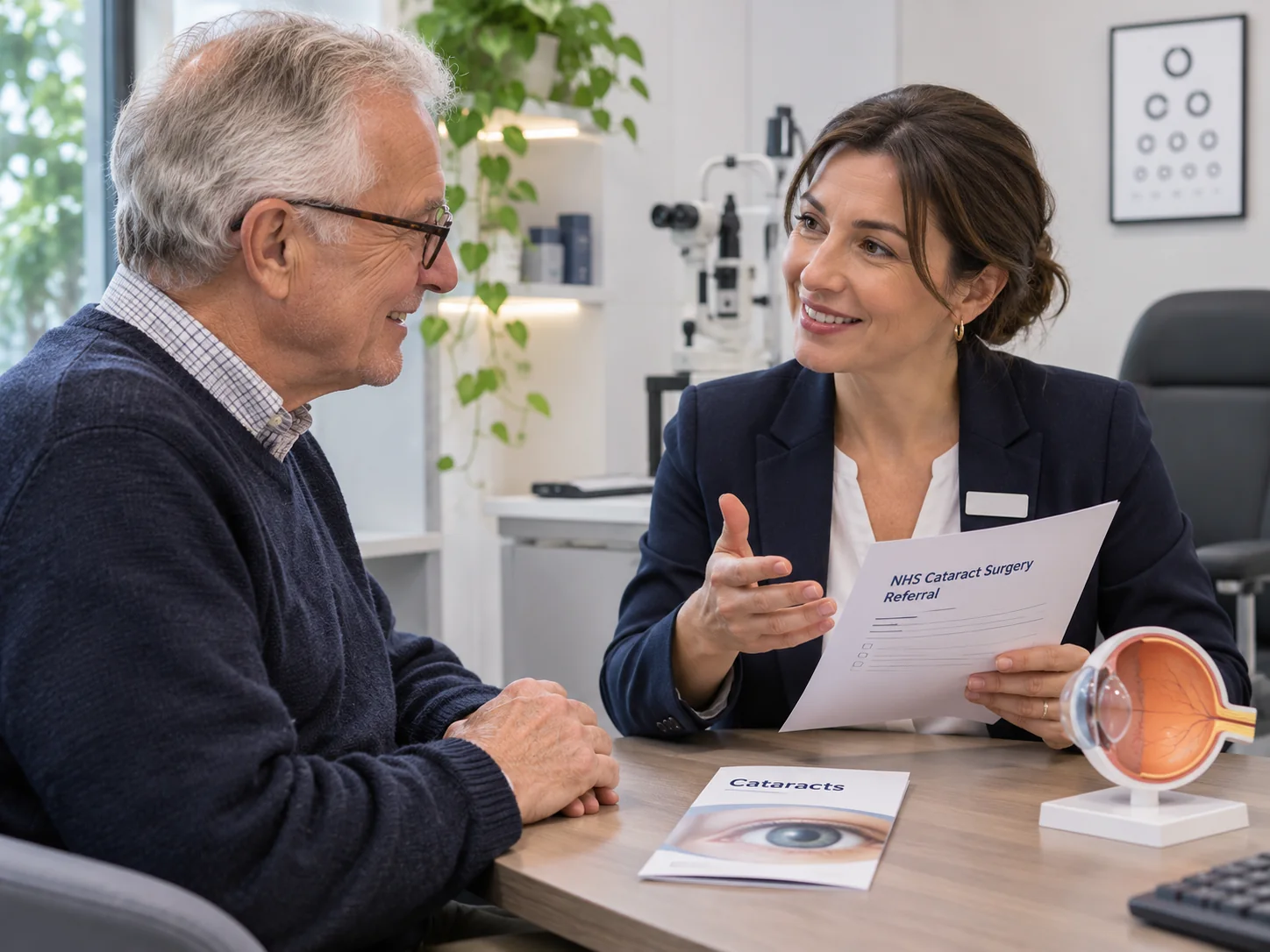
If you think you may have cataracts, start by speaking with an optometrist or GP. An optometrist can assess your vision and eye health, identify signs that may be consistent with a cataract, and explain whether referral for specialist assessment may be appropriate. The specialist considers the examination findings, the effect on your daily life and your preferences before discussing treatment.
In England, the referral may go to an NHS hospital, a local referral management or Single Point of Access service, or an independent provider commissioned to deliver NHS cataract care. The precise process depends on your area. In many cases patients can express a preference about where they are treated, but the available providers and referral arrangements are locally determined. Ask your optometrist or GP what choices apply to you.
Specialeyes Eyecare can assess your vision, discuss whether a cataract referral may be appropriate and help explain the referral route. We work with Optegra in relation to cataract care. Depending on the care pathway, we may also provide post operative optometric checks arranged through that relationship. Cataract operations themselves are performed by the relevant hospital or surgical provider, not at our opticians.
NHS cataract waiting lists
There is no single fixed NHS cataract waiting list time for everyone. Waiting times can vary between areas and providers, and they change over time. The time you wait may also depend on the local referral pathway, clinical assessment and appointment availability.
For current information, use the NHS My Planned Care website, which publishes provider information and waiting time updates, and ask the specialist or provider handling your referral. The NHS guide also explains waiting time rights in England and the circumstances that can affect them. Avoid relying on an old online estimate or a national average as a prediction of your individual date.
Choosing an NHS cataract provider
Depending on your local arrangements, NHS cataract surgery may be provided by an NHS hospital or an independent provider with an NHS contract. Patients may search for SpaMedica cataract surgery, Newmedica cataract surgery or Optegra NHS cataract care while considering their options. Each provider’s availability, locations, services and referral process can differ; your optometrist or GP can help check what is available through your pathway.
If you are looking up SpaMedica cataract surgery cost, first check whether the information is for NHS funded treatment or private self pay care. NHS funded care is subject to clinical eligibility and local commissioning arrangements. Private prices and any optional services are set by each provider and can change, so confirm costs and what is included directly with the clinic before making a decision.
When comparing providers, useful questions include how far you need to travel, how to contact the team, what the pre operative assessment involves, what lens options are offered through the NHS pathway, who provides aftercare, and how to get help if you have concerns after the operation.
What happens during an NHS cataract operation?
An NHS cataract operation removes the cloudy natural lens and replaces it with a clear artificial lens implant. Before surgery, the specialist examines and measures the eye to help select the lens implant. The procedure is usually performed under local anaesthetic. A small opening is made, ultrasound is commonly used to break up the cloudy lens, the fragments are removed, and the artificial lens is placed inside the eye.
Most people go home on the same day, but you should not drive yourself home. You will receive instructions about eye drops and recovery from your surgical team. Your vision may be blurry at first and can take several days to improve. You may still need glasses after surgery, for example for reading or distance, and your prescription may differ from your previous one. Follow the specific advice from your surgeon and care team.
Is laser eye surgery available on the NHS for cataracts?
Searches for laser eye surgery on the NHS can mean different things. Cataract surgery is a lens operation: the cloudy natural lens is removed and replaced with an artificial lens. It is not the same as laser refractive surgery such as LASIK, which reshapes the cornea to correct a glasses prescription. The NHS says laser eye surgery is not usually offered on the NHS, although exceptions may apply for certain medical needs.
Some parts of cataract care may involve a laser for a separate reason. For example, if the capsule behind the artificial lens becomes cloudy after surgery, a clinician may recommend a YAG laser capsulotomy. This is different from the original cataract operation. Your ophthalmologist can explain which procedure, if any, is appropriate for you.
Questions to ask at your cataract appointment
- What is causing my symptoms, and is a cataract present?
- How is the cataract affecting my vision and day to day activities?
- Is monitoring or surgery the appropriate next step for me?
- Which NHS providers can I choose from through my local pathway?
- What is the current waiting time information for each available provider?
- What should I expect before, during and after the procedure?
- Who should I contact if my symptoms change or if I have concerns after surgery?
Frequently asked questions
What are common NHS cataract symptoms?
Cataracts can cause gradually blurred or cloudy vision, sensitivity to light and glare, halos around lights, difficulty seeing at night and colours looking faded. An eye examination is needed to assess the cause.
How do I get an NHS cataract referral?
Start with an optometrist or GP. An assessment can identify a cataract and how it affects your vision and daily life. If referral is appropriate, the referral route and provider choices depend on the local NHS pathway.
How long is the NHS cataract waiting list?
There is no single waiting time that applies to every patient. Waiting times vary by area and provider and can change. Check My Planned Care for current local information and ask the eye specialist managing your referral.
Is cataract surgery on the NHS laser eye surgery?
NHS cataract surgery removes the cloudy natural lens and replaces it with an artificial lens; ultrasound is commonly used to break up the cloudy lens. This differs from laser refractive surgery such as LASIK. A YAG laser may be used later for a separate problem called posterior capsule opacification.
Are SpaMedica or Newmedica cataract operations available on the NHS?
Some independent providers deliver NHS commissioned cataract treatment in particular areas. Whether a provider is available to you depends on the local pathway and referral arrangements. Ask your optometrist or GP about current options.
Does Specialeyes Eyecare work with Optegra?
Yes. Specialeyes Eyecare works with Optegra in relation to cataract care. We can discuss assessment and referral options and any post operative optometric checks arranged through the pathway. The operation itself is carried out by the surgical provider.
Arrange an eye examination
If you have blurred vision, glare, trouble with night driving or colours that seem less vivid, contact Specialeyes Eyecare for an eye examination and advice about next steps. We are at 128 Uxbridge Road, Shepherds Bush, London W12 8AA. Call 020 8743 7552.
Further information
- NHS: Cataracts in adults
- NHS: Cataract surgery
- NHS: Guide to waiting times in England
- NHS My Planned Care: current provider waiting time information
- Optegra: NHS cataract patient information
- SpaMedica: referral information
- Newmedica: NHS referral information
This article is general information, not a diagnosis or personal treatment recommendation. NHS pathways and waiting time information can change; check the current advice for your area and discuss your circumstances with your eye care professional. Information reviewed 30 October 2026.
Clinical review
Clinically reviewed by: Hayder Ali, Qualified Optometrist
Last clinically reviewed:
Further clinical reading
For additional patient information and clinical guidance: