
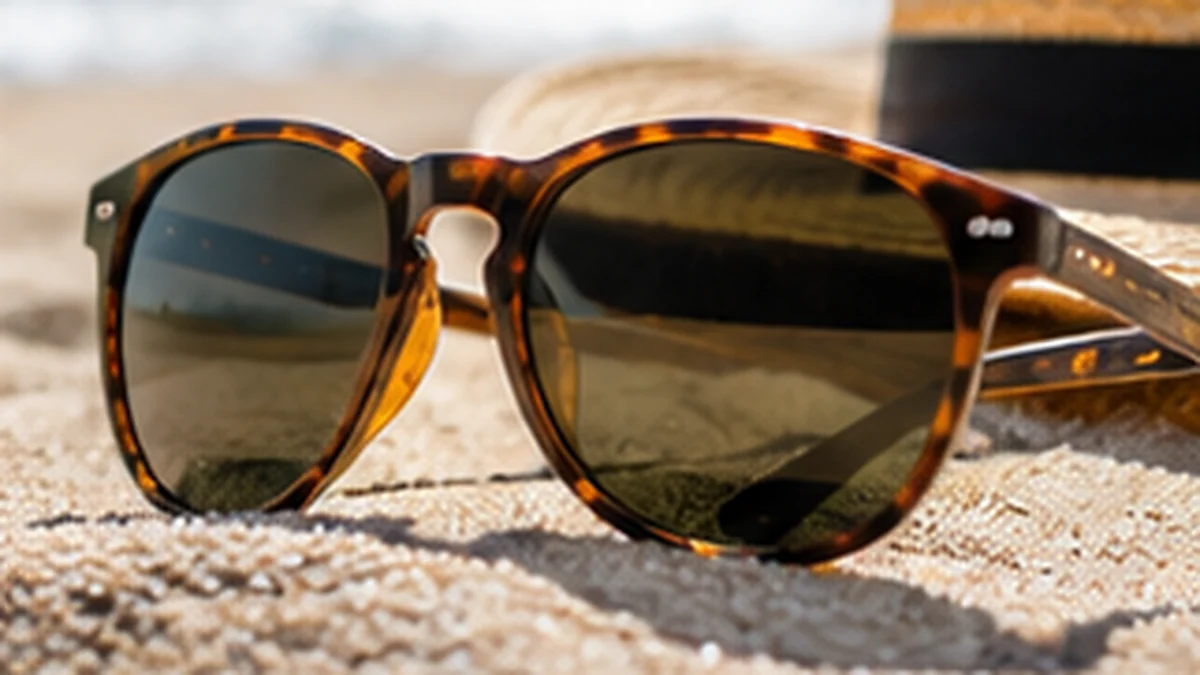
Tinted and polarised lenses both change the way bright light reaches your eyes, but they do different jobs. Prescription sunglasses can combine a correction with a tint or polarising filter, and the right choice depends on how and where you use them.
Tinted glasses and sunglasses
A tinted lens reduces the amount of visible light passing through it. Grey, brown and green are common sunglass tints. Grey tends to keep colours looking more neutral; brown can give a warmer view and may increase perceived contrast. Other colours, including blue, yellow, orange and rose, can be selected for particular looks or uses, but a colour tint alone does not guarantee UV protection.
You can choose a solid tint, a lighter tint or a graduated (gradient) tint that is darker at the top and lighter toward the bottom. A lighter tint may suit general use, while darker lenses are intended for brighter conditions. We can discuss custom tint colours and coatings for suitable prescription lenses.
What polarised sunglasses do
Polarised lenses contain a filter that reduces much of the reflected glare from flat surfaces such as wet roads, water and snow. They can make bright outdoor conditions more comfortable for driving in daylight, walking, fishing and other activities where reflected glare is distracting.
Polarisation does not mean the lens changes colour with sunlight. A fixed polarised lens remains polarised, while its tint usually stays the same. Polarisation is also separate from UV protection: check the UV specification of the exact sunglasses you choose.
Polarised or tinted: which should I choose?
| Feature | Tinted lens | Polarised lens |
|---|---|---|
| Primary purpose | Reduces brightness and changes the colour or appearance of the view. | Reduces reflected glare from surfaces such as water and roads. |
| UV protection | Depends on the lens specification. | Still needs to be checked separately. |
| Can the tint adapt? | Usually fixed, unless it is photochromic. | Usually fixed; some specialist photochromic sun lenses combine polarisation with changing tint. |
| Prescription option | Often available in prescription sunglasses, subject to the frame and prescription. | Available in selected prescription lens designs; compatibility varies. |
Prescription sunglasses
Prescription sunglasses bring your distance, reading or varifocal correction into a sun lens. Depending on the frame and prescription, options may include a solid tint, a gradient tint, polarisation, or a photochromic lens designed for outdoor use. We can check the frame, prescription and lens design before confirming which combinations are suitable.
If you need a pair mainly for driving in daylight, ask about glare reduction, tint darkness, UV protection and how the lens performs behind a windscreen. Ordinary photochromic lenses may stay lighter in a car; specific driving lenses are designed to respond differently.
Photochromic polarised choices
Some Transitions products combine photochromic technology with polarisation, but these are distinct lens options. Transitions XTRActive Polarized darkens and gains polarisation in bright outdoor light; it is not polarised behind the windscreen. Transitions Drivewear is a dedicated sun lens that is polarised at all times and changes its colour and darkness with light, including behind the windscreen. Drivewear is not a clear indoor lens.
A fixed polarised prescription sunglass lens may be more suitable if you want consistent glare reduction outdoors. A photochromic polarised lens may suit someone who wants the tint and polarisation to adapt outdoors. We can explain the differences and check current supply and prescription availability.
Coatings and tint customisation
Coatings can be tailored to the lens option, prescription and frame. Choices may include scratch resistant, anti reflective, water repellent or mirror finishes, depending on compatibility. A mirror finish changes the outside appearance of a lens; it is not the same as polarisation or UV protection.
We can also discuss custom base tints with suitable photochromic lenses. A base tint can add colour before the photochromic lens darkens; we often recommend a shade that complements or matches the changing lens colour. Custom base tints can be made in different colours, up to around 40% tint depending on the lens and preference, and can also be graduated. Our optometrist can explain the colour and tint choices for your order.
Choosing prescription sunglasses at Specialeyes
At Specialeyes Eyecare in Shepherds Bush, we can discuss prescription sunglasses, tinted lenses, fixed polarised lenses and photochromic sun options. We will check the prescription, frame shape, lens material and intended use, then explain available colours, coatings and any additional cost.
Frequently asked questions
Are tinted glasses polarised?
No. A tint changes brightness and colour; polarisation is a filter that reduces reflected glare. A lens can have a tint without being polarised, and not every polarised lens changes tint.
Do polarised sunglasses protect against UV?
Polarisation and UV protection are separate properties. Check that the selected lens provides the UV protection you need.
Can I get polarised prescription sunglasses?
Yes, selected polarised lens designs can be made to prescription. Suitability depends on the prescription, frame and lens design.
Can prescription sunglasses be varifocal?
Some sunglass lens ranges are available as varifocals. The available tints and polarised options depend on the specific product and prescription.
Can I add a custom tint to my lenses?
Custom solid or graduated tints may be available for suitable lenses. Photochromic combinations and tint strength need to be checked for compatibility before ordering.