
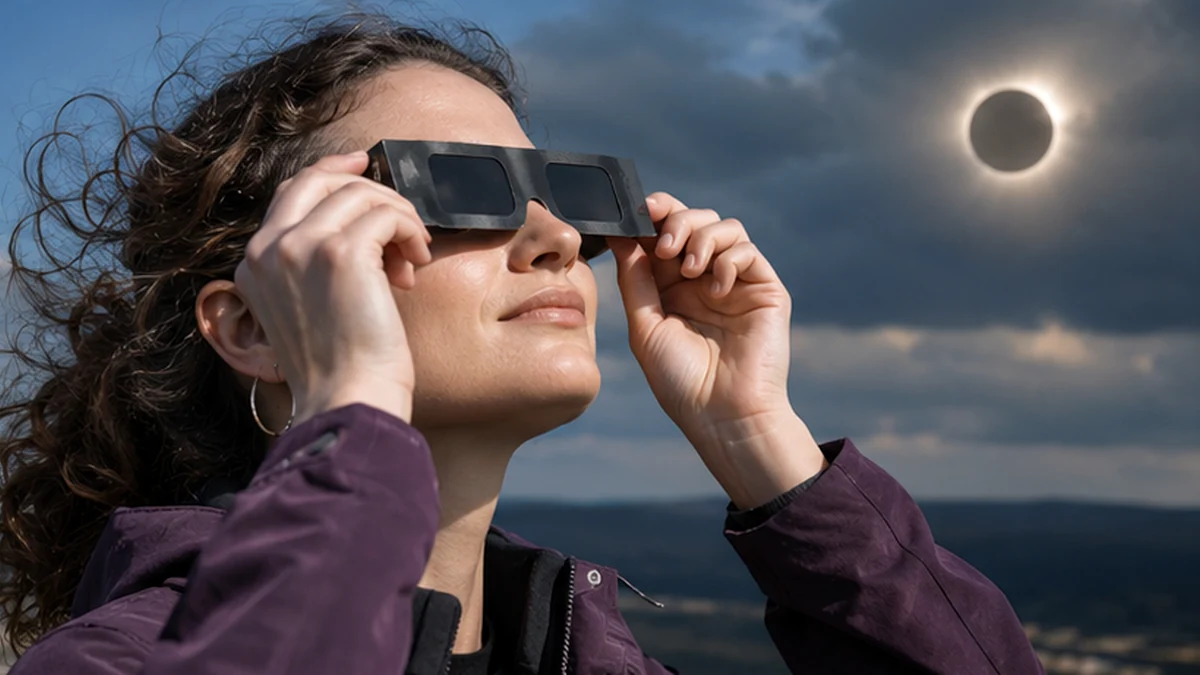
Understand why solar eclipse glasses differ from ordinary sunglasses, how to check viewers and where to find authoritative supplier and safety information.
Ordinary sunglasses are not eclipse glasses
Looking directly at the sun can permanently damage the retina. Ordinary sunglasses, including very dark sunglasses, are not suitable protection for direct solar viewing. Eclipse glasses and handheld solar viewers are specialised products, so they should not be selected using the same criteria as everyday prescription sunglasses.
Check the product and supplier
The American Academy of Ophthalmology specifies solar filters meeting ISO 12312-2 for direct viewing and directs readers to the American Astronomical Society for supplier information. Check current specialist guidance before buying. Do not assume that a familiar online marketplace, a dark appearance or a printed claim alone establishes that a product is appropriate.
Inspect before use
Read the instructions and examine the viewer for damage. Do not use damaged or scratched filters. Children need close supervision and an explanation of how to keep protection in place. Plan your viewing arrangements in advance so that nobody feels rushed into using an unsuitable substitute.
Cameras and binoculars need a different approach
Do not look through an unfiltered camera, telescope or binoculars while wearing eclipse glasses. Those devices can concentrate sunlight and damage the viewer. Seek advice from a knowledgeable astronomy specialist about equipment specific solar filters rather than improvising a combination of optical devices and personal eyewear.
Keep the plan simple
For a general viewing plan, keep appropriate solar protection in place whenever looking towards the sun and follow current event specific advice from authoritative astronomy sources. Do not guess when it is safe to remove a filter. This guide does not advertise an eclipse viewer product range or certify any particular seller. Consult the linked specialist guidance before the event.
Solar eclipse glasses: where to buy and what to check
Use the American Astronomical Society’s current supplier guidance as a starting point when choosing eclipse viewers. Check the exact product and seller rather than assuming that every listing on a large marketplace has been verified. Keep the instructions with the viewer and inspect its condition before each use.
If you are searching locally for solar eclipse eyewear, ask about the product’s specification and source before travelling. This article is educational guidance; it is not confirmation that Specialeyes Eyecare stocks eclipse viewers.
Can I watch a solar eclipse with sunglasses?
No. Everyday sunglasses, prescription sunglasses and polarised lenses are not substitutes for appropriate solar viewers. Their usual outdoor purpose should not be confused with looking directly at the sun. Do not use a dark appearance as a test of whether a filter is suitable.
Wearing prescription glasses and supervising children
The American Astronomical Society advises people who normally wear spectacles to keep them on and place eclipse glasses over them, or hold a suitable handheld viewer in front. Make sure the arrangement remains secure and follow the viewer’s instructions.
Explain the viewing plan to children before the event and supervise them throughout. If suitable equipment is unavailable, use authoritative guidance on indirect viewing rather than improvising a filter. Never look directly at the sun through a pinhole.
Why UV protection matters and why UV400 is not enough
Ultraviolet protection is an essential part of appropriate solar viewing protection. However, blocking UV alone does not make it safe to look at the sun. Direct viewing also exposes the eye to intensely bright visible light and infrared radiation. ISO 12312-2 addresses the transmission of all three through solar viewers.
Choose purpose made solar eclipse glasses or a handheld solar viewer from a trustworthy source, meeting the relevant solar viewing standard. Ordinary UV400 sunglasses, polarised sunglasses, sports tints and FL 41 lenses do not provide suitable protection for direct solar viewing. Adding several pairs of sunglasses is not a safe substitute.
What can happen without appropriate solar glasses?
Intense sunlight can damage the light sensitive retina, particularly the central area used for detailed vision. This injury is called solar retinopathy. Symptoms can include blurred central vision, a central blind spot, distorted shapes and reduced or altered colour vision. Some changes can be permanent.
The retina has no pain receptors, so an injury can occur without pain. Symptoms may appear hours later; feeling comfortable while watching does not establish that your eyes are protected. If you notice a new blind spot, blur, distortion or altered colour vision after looking at the sun, stop viewing and seek urgent assessment from an eye care professional. Do not wait for pain or assume the changes will resolve.
Frequently asked questions
Are eclipse glasses the same as UV400 sunglasses?
No. Direct solar viewing needs specialised protection. Ordinary sunglasses must not be used as a substitute, regardless of tint darkness.
Can eclipse viewers be used with binoculars?
Do not look through unfiltered binoculars, telescopes or cameras while using eclipse glasses in front of your eyes. Ask an astronomy specialist about correctly fitted equipment specific filters.
Can I reuse an old pair of eclipse glasses?
Check its provenance, condition and the current manufacturer and specialist guidance. Do not use a damaged viewer, or assume an unknown product is suitable because it was used at a previous event.
Related reading
Sources and further information
American Astronomical Society: the solar viewer standard · AAPOS: solar retinopathy and symptoms
Clinical review
Clinically reviewed by: Hayder Ali, Qualified Optometrist
Last clinically reviewed: