
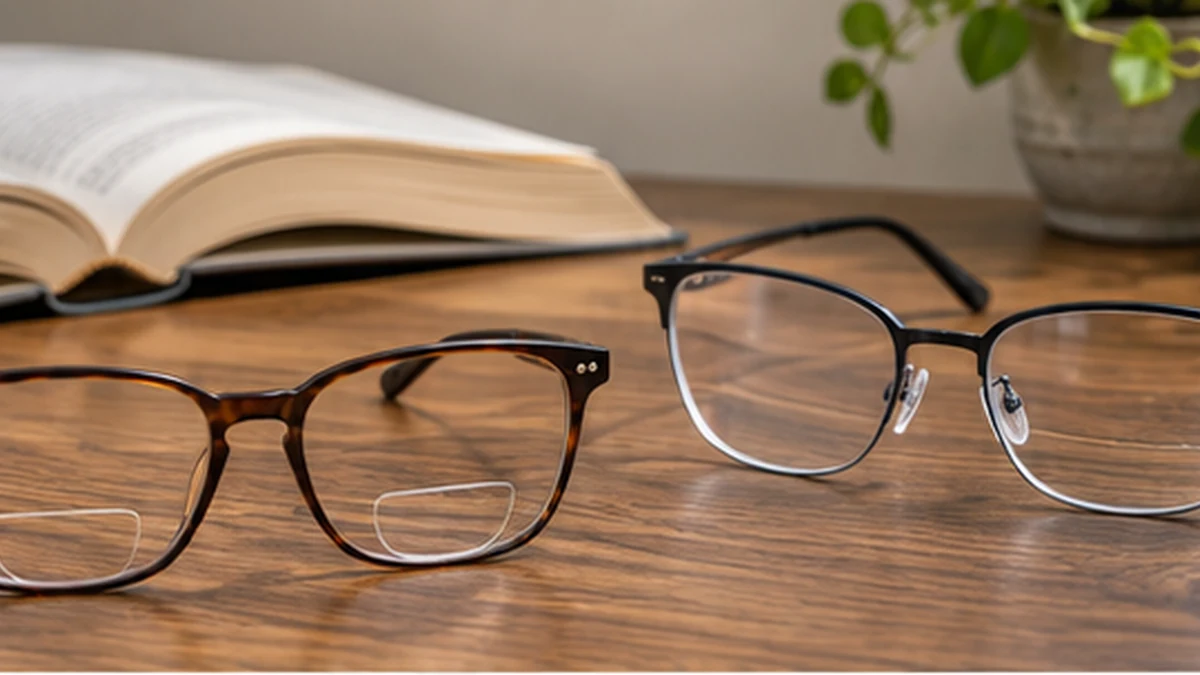
Both lens types can help with distance and near vision, but their zones, appearance and viewing experience are different.
Bifocal and varifocal: the main difference
The main difference in bifocal v varifocal lenses is how their prescription zones are arranged. Bifocal glasses have two distinct powers, commonly distance and near, separated by a visible line. Varifocal glasses change power gradually from the distance area at the top, through an intermediate area, to near at the bottom.
| Feature | Bifocal lenses | Varifocal lenses |
|---|---|---|
| Vision zones | Usually distance and near | Distance, intermediate and near |
| Visible division | Usually a visible segment line | No visible segment line |
| Power change | A defined step between two powers | Gradual change across the lens |
| Getting used to them | Learning where to look for each zone | Learning to use the blended zones and move the head/eyes appropriately |
How bifocals work
Bifocal lenses provide one prescription in the main lens and a separate reading segment, usually in the lower part. The segment line marks where the near prescription begins. Bifocals can suit people who want a clearly separated reading area and do not need a gradual change through intermediate distances.
How varifocals work
Varifocal lenses, also called progressive lenses, have blended powers for distance, intermediate and near vision. The gradual transition avoids a visible segment line. ZEISS describes progressive lenses as having distance, intermediate and near zones that blend across the lens; see its overview of progressive lenses.
Varifocals need accurate measurements, including pupillary distance (PD) and the fitting height in the chosen frame. Fitting height depends on the frame’s shape and how it sits on your face. Correct adjustment and measurements help position the lens zones for your eyes.
Which is better: bifocal or varifocal?
Neither is automatically best for everyone. Your prescription, the distances you use most, frame choice, comfort and personal preference all matter. A visible line may be acceptable to some wearers, while others prefer a lens without a segment line. Varifocals include an intermediate zone, but need frame specific measurements and a period of adjustment for some people.
Discuss reading, screens, driving and other regular tasks when choosing. We can explain bifocal and varifocal options and help take the required measurements in the frame you select. You may also want to read our guides to bifocal spectacles and multifocal contact lenses.
Frequently asked questions
What is the difference between bifocal and varifocal glasses?
Bifocal lenses have two distinct zones, usually distance and near, separated by a visible line. Varifocals blend distance, intermediate and near powers gradually without a visible segment line.
Are varifocals better than bifocals?
It depends on your prescription, tasks, fit and preferences. Varifocals provide an intermediate zone, while bifocals offer two defined powers. An optician can help you compare them.
Do bifocal glasses have an intermediate zone?
Most conventional bifocals provide distance and near vision but do not have the same gradual intermediate range as varifocals.
What measurements do varifocals need?
Varifocals need accurate pupillary distance and fitting height measurements in the chosen frame. The fitting height depends on how that particular frame sits on your face.
Do bifocal or varifocal glasses take time to get used to?
Some wearers need time to learn where to look through each lens zone. Your optician can explain how to use and care for your new glasses and check the fit if you have difficulty.
Contact Specialeyes Eyecare
To discuss glasses or contact lens options, visit us at 128 Uxbridge Road, Shepherds Bush, London W12 8AA or call 020 8743 7552.