
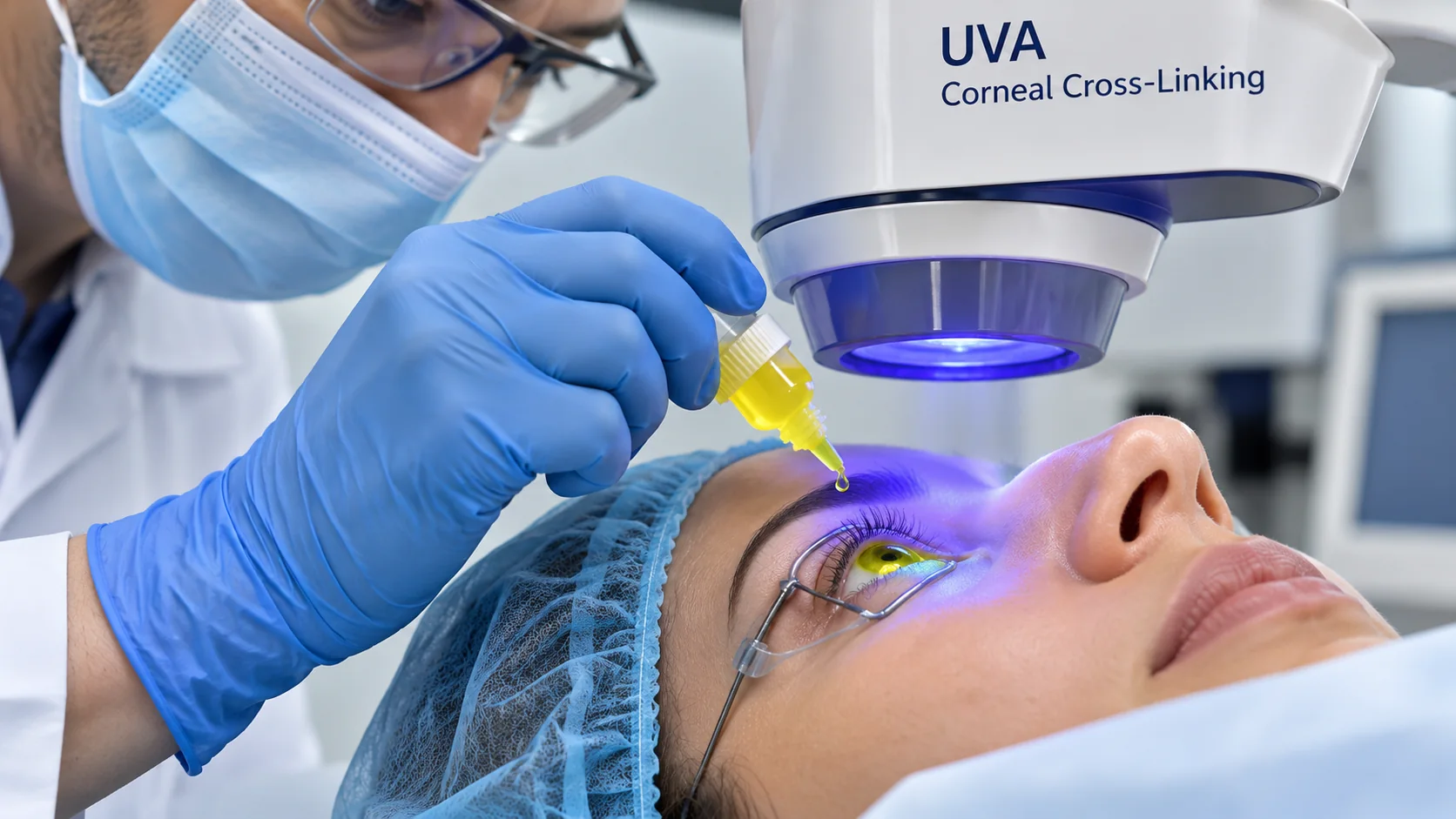
Keratoconus treatment depends on the cornea’s shape, whether it is continuing to change and how well vision can be corrected. Some people need only monitoring and glasses; others may benefit from specialist contact lenses or a procedure. Corneal collagen cross linking aims to slow or stop progression, while a corneal transplant may be considered in advanced cases.
How is a keratoconus treatment plan chosen?
An ophthalmologist considers the corneal scans, corneal thickness, changes over time, age, vision and symptoms. Treatment is individual: not everyone with keratoconus needs surgery, and a procedure that is appropriate for one person may not suit another. Regular follow up helps identify progression and review how well glasses or contact lenses are working.
At our West London practice, we can diagnose keratoconus and arrange referral for specialist treatment or continuing monitoring through hospital and private care. When glasses are part of the plan, our optician takes time to refine the refraction. We have extensive experience assessing prescriptions in keratoconus and aim to provide the most accurate spectacle result the changing or irregular cornea allows.
Monitoring keratoconus
If scans show that the cornea is stable and vision is manageable, an ophthalmologist may recommend monitoring rather than immediate treatment. Follow up may include vision testing, refraction and repeat corneal topography or tomography. The schedule should be set by the clinician responsible for your care.
Contact lenses can temporarily alter the corneal surface and may affect scan measurements. Follow the hospital or clinic’s instructions about contact lens wear before corneal imaging; do not stop wearing prescribed lenses without discussing this with your care team.
Glasses and specialist contact lenses
In early keratoconus, glasses or soft contact lenses may give useful vision. When the cornea becomes more irregular, a standard spectacle prescription may not fully correct the distortion. Specialist contact lens options can include RGP (rigid gas permeable) lenses, hybrid lenses, piggyback systems, custom soft lenses and scleral or mini scleral lenses. These are selected and fitted according to the individual cornea, vision needs and comfort.
These lenses improve the way light is focused while they are worn; they do not strengthen the cornea or prevent progression. Some people continue to use glasses for certain tasks even when they also wear contact lenses. Our optician in West London has substantial experience taking careful refractions for patients with keratoconus, helping us make glasses with the clearest and most accurate correction we can achieve for that prescription.
Corneal collagen cross linking (CXL)
Corneal cross linking, also called collagen cross linking, corneal collagen cross linking or CXL, is a treatment used when keratoconus is progressing and the cornea is suitable. Riboflavin (vitamin B2) drops and ultraviolet light are used to strengthen links between collagen fibres in the cornea. The aim of this cross linking eye procedure is to stabilise the cornea and reduce the risk of further thinning or steepening.
Cross linking eye surgery does not reshape the cornea back to normal and is not primarily a way to improve vision. Some people’s vision or corneal shape may improve, but the main goal is to slow or stop further progression. Glasses or contact lenses may still be needed afterwards.
There are different protocols, including epithelium off and other approaches. The treating ophthalmologist will explain which corneal cross linking procedure, if any, is suitable. Temporary soreness and blurred vision can occur during healing; infection, scarring or reduced vision are less common but important risks to discuss before treatment. Moorfields provides further information on corneal cross linking surgery and aftercare.
Corneal ring segments and other selected procedures
Intracorneal ring segments (sometimes called corneal rings or ICRS) are small implants placed within the cornea in selected cases. They aim to make the corneal shape more regular and may improve vision or help with contact lens fitting. They are not suitable for everyone and do not replace monitoring or necessarily stop keratoconus progression. A corneal specialist can discuss whether they have a role, sometimes alongside cross linking.
Some specialist centres may consider other combined or laser based procedures for carefully selected patients. These are not routine options for everyone with keratoconus, and the potential benefits and risks depend on the corneal measurements and clinical situation.
Corneal transplant (keratoplasty)
A corneal transplant, also called a corneal graft or keratoplasty, may be considered when keratoconus is advanced and glasses or contact lenses no longer provide adequate vision, or when significant scarring affects the cornea. Transplant surgery replaces part or, in some cases, the full thickness of the damaged cornea with donor tissue.
For suitable keratoconus cases, a surgeon may consider deep anterior lamellar keratoplasty (DALK), a partial thickness transplant that replaces the affected front and middle layers while retaining the patient’s inner corneal layer. Another option is penetrating keratoplasty (PK), a full thickness corneal transplant. Which procedure is possible depends on the condition of the cornea and the surgeon’s assessment.
Healing and vision stabilisation can take time. A transplant may improve vision, but glasses or contact lenses can still be needed afterwards. Follow up is important because complications, including graft rejection or failure, can occur. The NHS explains the general cornea transplant procedure and reasons for surgery, and Moorfields has information on DALK.
Is a corneal transplant the same as an eye transplant?
People sometimes search for an “eye transplant” or use the phrase “corneal transport”. For keratoconus, the operation being discussed is a corneal transplant: replacing some or all of the clear front tissue of the eye. It does not replace the whole eye. “Keratoplasty” is the medical term for surgery on the cornea, including a corneal graft.
Which treatment is right for me?
Only an eye care professional who has assessed your cornea and reviewed changes over time can advise which option may be suitable. If you have keratoconus, follow your specialist’s monitoring plan and ask before changing or stopping glasses or contact lens wear. Sudden pain or a rapid drop in vision needs urgent eye care advice.
Moorfields’ keratoconus diagnosis and treatment guidance describes how vision tests, refraction and corneal scans can help guide care. Cross linking, transplant and specialist lens choices should be discussed with the hospital or private corneal team responsible for your treatment.
Frequently asked questions about keratoconus treatment
Does cross linking cure keratoconus?
No. Corneal collagen cross linking aims to stabilise keratoconus and reduce further progression. It does not cure the condition, and glasses or contact lenses may still be needed.
Is corneal cross linking the same as cross linking eye surgery?
People may search for cross linking eye surgery, a cross linking eye procedure or a cross linking eye operation. The clinical term is corneal collagen cross linking (CXL); the treating ophthalmologist can explain the specific technique and whether it is appropriate.
What keratoconus therapy is available?
Options may include monitoring, glasses, specialist contact lenses, cross linking for suitable progressive disease, corneal rings in selected cases or a corneal transplant for advanced disease. The right plan depends on individual scans and clinical advice.
When might someone need a corneal transplant?
A corneal transplant may be considered for advanced keratoconus when vision cannot be corrected sufficiently with glasses or contact lenses, or if corneal scarring is affecting sight. Many people with keratoconus never need a transplant.
Will I still need glasses after a corneal transplant?
Possibly. Some people need glasses or contact lenses to achieve their best vision after the cornea heals. Your corneal surgeon and optician can advise when it is appropriate to update a prescription.
Can keratoconus be treated with glasses alone?
Glasses can help correct vision, especially in earlier stages, but they do not stop the cornea from changing. If the condition is progressing or the prescription is not giving adequate vision, discuss the next steps with your eye care team.
Keratoconus assessment and referrals in West London
Specialeyes Eyecare at 128 Uxbridge Road, Shepherds Bush, London W12 8AA can assess and diagnose keratoconus, take time over spectacle refraction, and refer patients for further treatment and monitoring through hospital and private care.
Call 020 8743 7552 or book an eye test online. Read about prescription glasses in West London or our eye examinations in Shepherds Bush.
Clinical review
Clinically reviewed by: Hayder Ali, Qualified Optometrist
Last clinically reviewed:
Further clinical reading
For additional patient information and clinical guidance: