
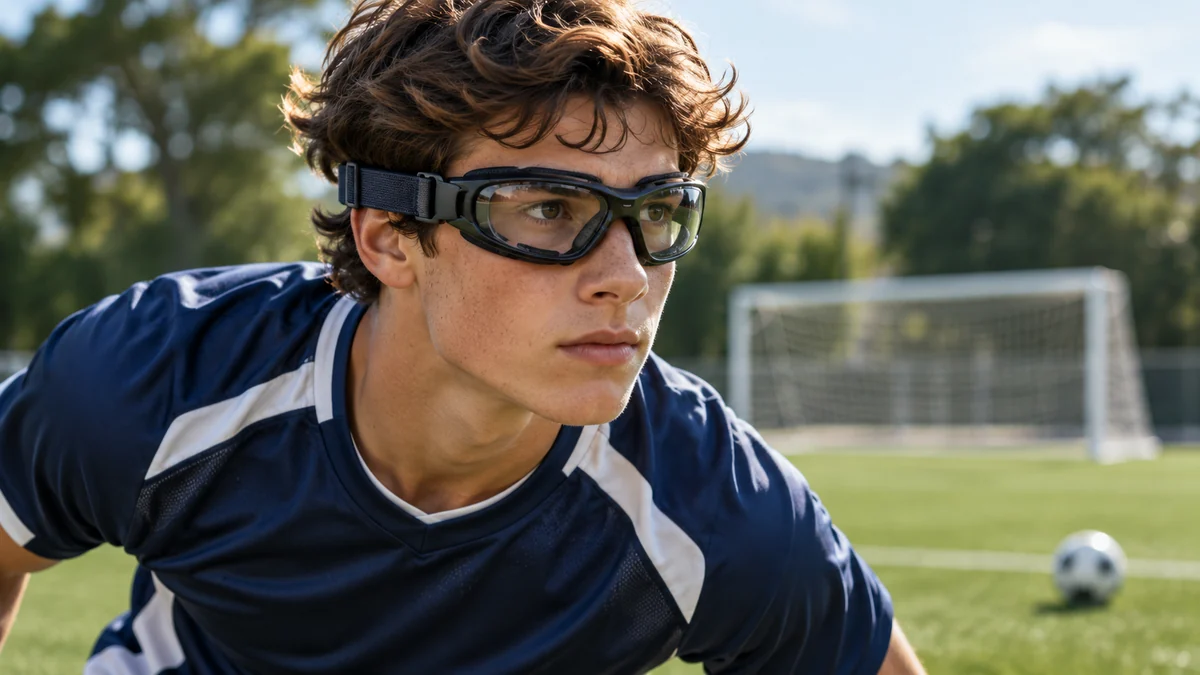
What to check when choosing prescription football goggles for adults or children, including fit, retention, goggles over glasses and match day questions.
Choosing eyewear for football
Football involves movement, flying balls and close contact with other players. If you need vision correction, discuss purpose designed sports eyewear rather than assuming your everyday glasses are the right option. The prescription, frame, retention system and playing environment all need consideration.
Check the playing requirements
The Football Association guidance says eyewear must not be dangerous to the wearer or other players. Ask your club or competition about its current requirements before ordering, and raise any questions about match day approval in advance. A product description is not a promise that every official will approve every fitting.
What to assess during fitting
Explain whether the goggles are for an adult or child, the level of play and any other equipment worn. Ask about stability during movement, pressure around the nose and temples, side coverage and how the strap is adjusted. Bring a current prescription and discuss whether the selected design can accommodate it.
Football goggles over glasses
If you are searching for football goggles over glasses, ask whether that arrangement is designed and assessed for the sport. Do not assume that placing one frame over another provides appropriate protection or a stable fit. The practitioner can discuss direct prescription options and any suitable alternatives.
Review the fit over time
For children in particular, the fit may need attention as they grow. Follow the manufacturer’s care instructions and ask what to do after an impact or visible damage. Sports eyewear can reduce some risks, but no pair can guarantee that an eye or facial injury will never happen.
Sports goggles for football: what should you compare?
Compare the complete frame and lens system, not just the prescription power. Discuss the lens material, frame construction, strap and fit with a dispensing professional. The FA guidance highlights polycarbonate lenses and a sports band, while also making clear that the referee must consider whether eyewear presents a danger.
A label such as football glasses does not explain how a particular pair fits you. Check how the frame behaves when you turn your head, look down or move quickly. Tell the dispenser about any discomfort or movement rather than simply tightening the strap as far as possible.
Choosing youth football goggles
Children should be involved in the fitting so they can describe pressure, slipping or difficulty seeing through the lenses. Ask how to recognise when the fit needs reviewing as the child grows. A spare pair of everyday glasses can help before and after a match, but it does not replace an appropriate playing eyewear assessment.
Before the first match, speak to the coach or club about the equipment and any competition specific requirements. Leave time to resolve questions instead of arriving at kick off with an untested purchase.
Frequently asked questions
Can I wear prescription football goggles in a match?
Ask the club or competition about current requirements and raise questions before playing. Referees must consider whether equipment is dangerous to the wearer or other players; no product description guarantees acceptance in every situation.
Are football goggles over glasses a good option?
Only consider a combination intended and assessed for that use. Two frames worn together can affect the fit, so ask about suitable direct prescription alternatives rather than improvising.
Do sports goggles prevent every injury?
No. Sports eyewear can offer protection, but severe impacts and the nature of the activity can still cause injury. Follow the product instructions and seek advice if the eyewear is damaged.