
Glaucoma is the name for a group of eye diseases that damage the optic nerve, which carries visual information from the eye to the brain. The damage can gradually affect sight, often starting with peripheral vision. In many cases it develops slowly and causes no clear warning signs at first, so regular eye checks matter.
Glaucoma: what is it?
When people ask “glaucoma what is it?”, they are usually asking about a condition in which the optic nerve becomes damaged over time. Glaucoma causes are not always fully understood. In many cases, fluid inside the eye drains less efficiently, which can raise eye pressure and contribute to damage. Glaucoma can also occur when pressure readings are within the usual range, so pressure alone cannot confirm or rule it out.
Glaucoma disease is not one single condition. The most common form is open angle glaucoma, also called chronic open angle glaucoma. The drainage angle remains open, but fluid drains less efficiently. This type usually progresses gradually. Other forms can involve a narrow or closed drainage angle; an acute episode can cause a sudden rise in pressure and needs urgent medical attention.
What are glaucoma symptoms?
A common glaucoma symptom in early open angle disease is no symptom at all. Changes to peripheral vision can happen gradually and may not be noticed until the condition has progressed. Central vision can remain clear for some time, so feeling that your sight is fine does not rule out glaucoma.
Acute angle closure glaucoma is different. It may cause sudden severe eye pain, a red eye, blurred vision or rainbow coloured rings around lights, often with headache, nausea or vomiting. These symptoms require emergency assessment straight away. Go to A&E or call 999 if you have sudden severe symptoms; do not wait for a routine appointment. The NHS glaucoma guidance describes the symptoms and urgency.
Eye pressure, high eye pressure and glaucoma
An eye pressure test measures intraocular pressure (IOP), the pressure of fluid inside the eye. High eye pressure can increase the risk of optic nerve damage, but it does not automatically mean someone has glaucoma. Some people have ocular hypertension, meaning raised pressure without detected nerve damage. Conversely, a person may have glaucoma even when their pressure is not high.
There is no single pressure reading that confirms or rules out glaucoma for everyone. A clinician interprets the measurement alongside the optic nerve, visual field, eye structure and personal risk factors. A pressure result can also vary, so repeat measurements or other tests may be recommended.
What does a glaucoma eye test involve?
A glaucoma eye test is usually a group of checks rather than one measurement. Depending on your history and findings, an assessment may include:
- Eye pressure test: a tonometer measures pressure, sometimes using a gentle air puff or a probe after numbing drops.
- Optic nerve examination: the clinician examines the nerve at the back of the eye and may take photographs or an OCT scan to record its structure.
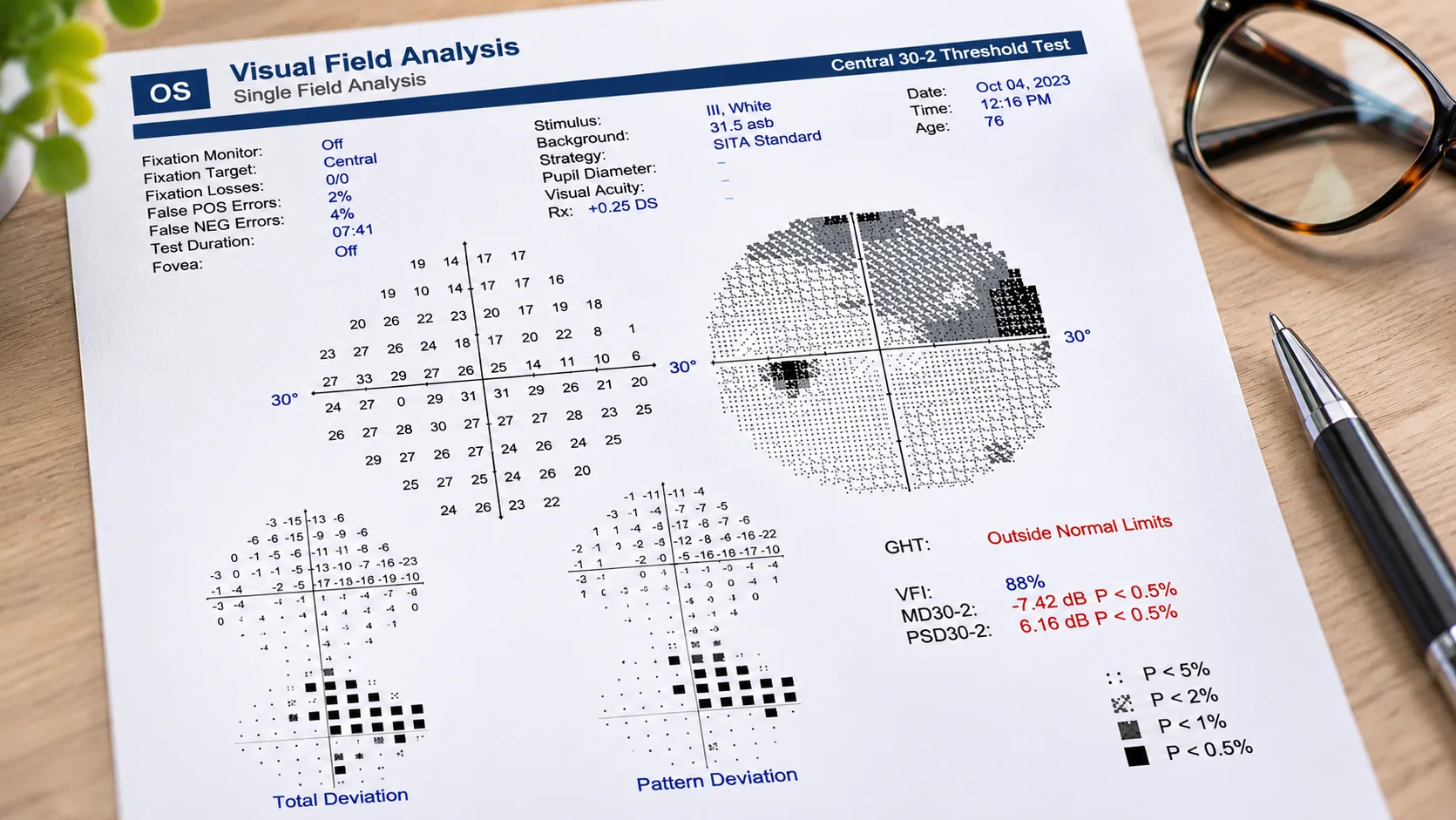
- Visual field test: you look at a target and respond when you see small lights, checking for areas of reduced peripheral vision.
- Drainage angle assessment: a specialist may examine the angle where fluid drains to help identify narrow angle risk.
- Corneal thickness measurement: this can help interpret pressure readings.
Not everyone needs every test at every visit. The results are considered together and may be repeated over time to look for change. The NICE guideline on glaucoma describes the tests used in assessment and monitoring.
Why routine checks matter
Glaucoma damage cannot usually be reversed, but treatment and monitoring can often help slow or prevent further loss of sight. Because early open angle glaucoma may not cause noticeable symptoms, routine eye examinations are one way to identify possible signs before you notice a change. The timing of follow up depends on your results and risk.
Glaucoma assessment and referral in Shepherds Bush
At Specialeyes Eyecare in Shepherds Bush, we can assess your eye health, carry out relevant checks and help diagnose possible glaucoma. If examination findings suggest that you need specialist investigation or treatment, we can help with referral to the Hospital Eye Service. The hospital team confirms the diagnosis where needed and advises on treatment and monitoring.
If you have already been referred or are being monitored, continue to follow the instructions from your eye care team. You can learn more about our eye tests and OCT scans in Shepherds Bush or contact us at 128 Uxbridge Road, Shepherds Bush, London W12 8AA.
Frequently asked questions
Can you have glaucoma with normal eye pressure?
Yes. Glaucoma can develop even when an eye pressure reading is within a usual range. Optic nerve and visual field findings are also important.
Does high eye pressure mean I have glaucoma?
No. Raised pressure can increase risk, but it is not the same as optic nerve damage. Further assessment determines whether glaucoma is present and whether monitoring or treatment is appropriate.
What causes glaucoma?
Glaucoma causes are not always known. Raised eye pressure is a common risk factor, but glaucoma may also occur with pressure in the usual range. The optic nerve and visual field must be assessed as part of diagnosis.
Can glaucoma be detected during a routine eye test?
An eye examination may identify signs that need further glaucoma testing or referral. The exact checks depend on your age, history, symptoms and examination findings.
Should I wait for an optician appointment if I suddenly have a painful red eye?
No. Sudden severe eye pain with redness, blurred vision or halos, particularly with nausea or headache, can indicate acute angle closure. Seek emergency care immediately.
Arrange an eye examination
If you have concerns about glaucoma, family history or an eye pressure result, call 020 8743 7552 or book an eye test online. Sudden severe symptoms need emergency care, not a routine booking.
Clinical review
Clinically reviewed by: Hayder Ali, Qualified Optometrist
Last clinically reviewed:
Further clinical reading
For additional patient information and clinical guidance: