
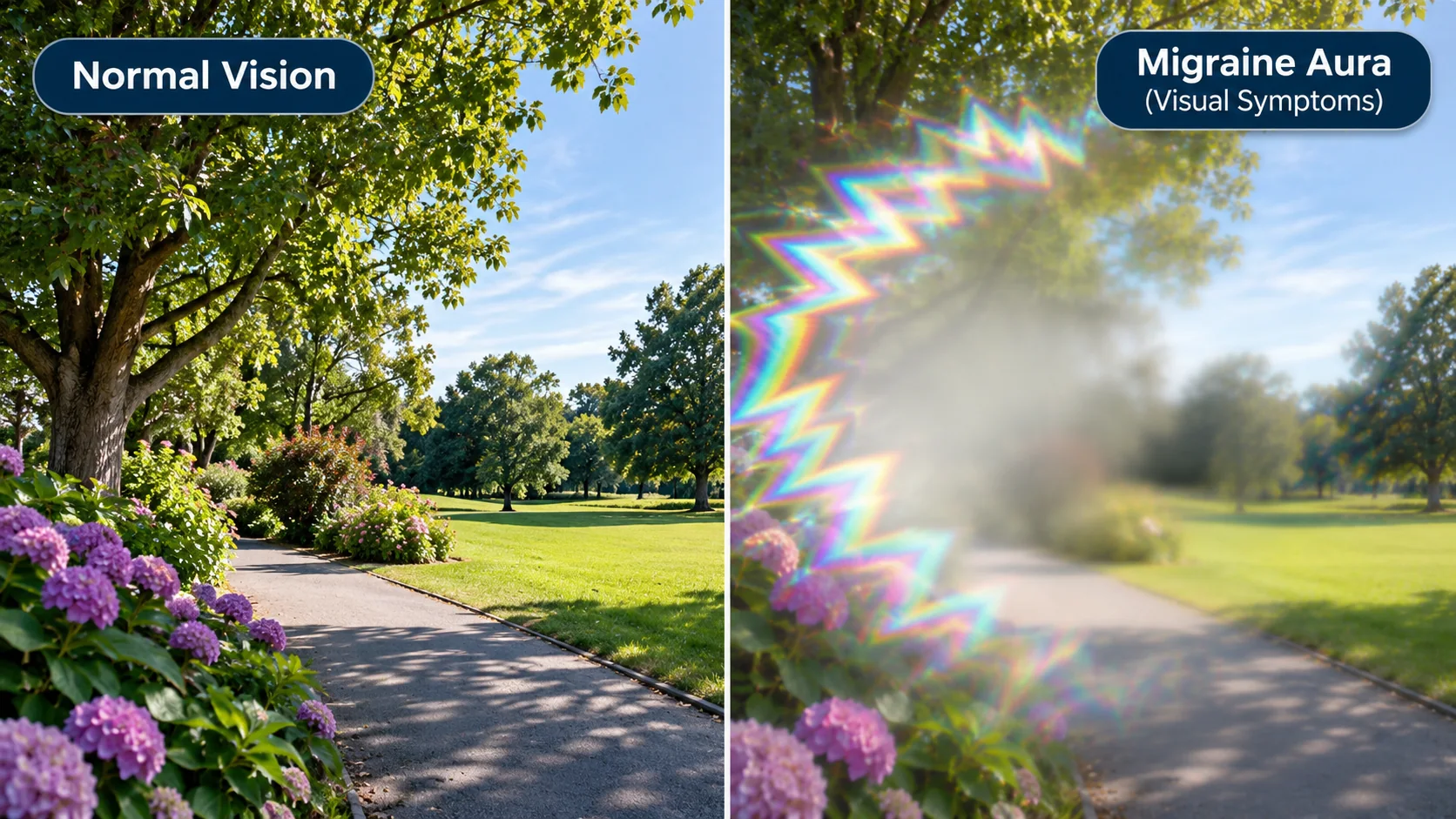
Migraine aura is a temporary set of neurological symptoms that can affect sight, sensation, balance or speech. Visual aura may appear as shimmering or zigzag lines, flashing lights, blind spots or a spreading patch of distortion. It can come before a headache, occur during a migraine, or happen without headache.
What can visual aura look like?
A visual aura may start as a small shimmering spot or blind area that gradually expands or moves across what you see. People describe zigzag patterns, flickering or flashing lights, bright dots, wavy lines, blurred patches or missing areas of vision. Symptoms commonly develop over several minutes and settle within about an hour, although experiences vary.
Some people also get tingling or numbness, dizziness, or difficulty finding words. A headache may follow the aura, but it does not always. A migraine aura without headache is sometimes called a silent migraine or acephalgic migraine.
Migraine with aura and migraine without aura
Migraine with aura includes reversible visual, sensory or speech symptoms around an attack. Migraine without aura causes migraine symptoms without that warning phase. A person may have both types at different times.
Aura headache is one common pattern: the visual or other aura symptoms occur before or around the headache. However, visual aura can occur without head pain, and a headache with blurred vision does not automatically mean the person has aura. A clinician can help distinguish these patterns and consider other causes of vision changes.
What do “ocular migraine” and “ophthalmic migraine” mean?
People often search for ocular migraine symptoms, ocular migraine aura, ocular ophthalmic migraine or visual migraine. These terms are used inconsistently. Some people use “ocular migraine” to mean the visual aura of an ordinary migraine, which is generated by activity in the brain and often affects the visual field seen by both eyes. Others may mean retinal migraine, a rare condition involving temporary visual loss or disturbance in one eye.
It can be difficult to tell whether a visual change is in one eye or in the same side of the visual field in both eyes. Do not diagnose yourself from the word “ocular”. A new visual disturbance that seems limited to one eye, or any first time vision problem, should be assessed promptly to rule out eye and neurological causes. The NHS retinal (ocular) migraine guidance advises getting medical help for vision symptoms, especially when they occur for the first time.
What causes migraine aura?
The exact aura migraine causes are not fully understood. People may also search for “ocular migraine causes”; clinicians usually discuss this as the cause of migraine aura. Migraine is a neurological condition, and visual aura is thought to involve temporary changes in brain activity affecting the visual processing areas. Many things can be associated with migraine attacks, but triggers differ from person to person. A symptom diary may help you and your clinician notice patterns; it cannot confirm the diagnosis by itself.
Visual symptoms from migraine are not the same as floaters. Floaters are drifting spots or threads that cast shadows inside the eye, while aura often changes or spreads across the field of vision. New flashes, floaters, a curtain like shadow or sudden loss of sight need urgent eye assessment rather than being assumed to be migraine.
Can an uncorrected prescription contribute to headaches?
An uncorrected or outdated glasses prescription can make focusing more difficult and may contribute to blurred vision, eyestrain or headaches, particularly during reading, screen work or other sustained visual tasks. Refractive errors such as astigmatism, short sightedness or long sightedness can have these symptoms, and an eye examination can check whether a prescription is needed or has changed. The NHS describes headaches and eyestrain among possible symptoms of astigmatism and long sightedness.
This is different from migraine aura. An uncorrected prescription may contribute to visual discomfort, but it should not be assumed to explain zigzag lights, spreading blind spots, sudden loss of vision, or other neurological symptoms. A new or unusual visual episode needs medical advice; an eye test can assess the prescription and eye health as part of that process. See the NHS pages on astigmatism and long sightedness.
Hemiplegic migraine symptoms
Hemiplegic migraine is an uncommon migraine type that can include temporary weakness on one side of the body, sometimes alongside visual, sensory or speech symptoms. Because sudden weakness or speech difficulty can also be a sign of stroke or another emergency, do not assume a new episode is migraine. Call 999 for sudden facial or limb weakness, difficulty speaking, confusion, or sudden loss of vision.
When should visual aura get urgent advice?
Seek urgent GP or NHS 111 advice if you have visual symptoms for the first time, if an aura lasts longer than an hour, or if your usual pattern changes or worsens. Get emergency help for sudden severe headache, sudden vision loss, double vision, weakness on one side, difficulty speaking, confusion or other sudden neurological symptoms. These signs need urgent assessment even if you have had migraine before.
The NHS migraine guidance describes common aura symptoms and when to seek urgent help.
Frequently asked questions about migraine aura
Can you have migraine aura without a headache?
Yes. Migraine aura without headache can cause temporary visual or other neurological symptoms without head pain. If it is new, prolonged or different from your usual pattern, seek medical advice rather than assuming it is migraine.
Does visual aura happen in one eye or both eyes?
Typical migraine visual aura often affects the visual field processed by the brain, which may be present when either eye is covered. But it can be difficult to tell, and one eye symptoms can have other causes. New or first time vision changes need prompt medical advice.
What are common ocular migraine symptoms?
People use “ocular migraine” for different symptoms, including zigzags, flashing or shimmering lights, blind spots and temporary visual loss. Because the term is imprecise, describe exactly what you see and whether it seems to affect one eye or both when speaking with a clinician.
What are migraine aura causes?
The precise cause is not fully known. Aura is associated with temporary neurological changes in migraine. Stress, sleep changes, hormones or other factors may be linked to attacks for some people, but triggers are individual and do not explain every episode.
Can migraine aura be a stroke?
Migraine aura and stroke can share symptoms, so a first or unusual episode cannot safely be diagnosed online. Sudden weakness, speech problems, confusion or sudden vision loss needs emergency assessment.
Discuss vision changes in Shepherds Bush
An eye examination can help assess eye health and explore whether a visual change may need further care. If you have new or sudden symptoms, follow the urgent advice above rather than waiting for a routine appointment. For routine eye care enquiries, visit our page about eye tests and OCT scans in Shepherds Bush.
Specialeyes Eyecare is at 128 Uxbridge Road, Shepherds Bush, London W12 8AA. Call 020 8743 7552 for general appointment enquiries.
Clinical review
Clinically reviewed by: Hayder Ali, Qualified Optometrist
Last clinically reviewed:
Further clinical reading
For additional patient information and clinical guidance: