
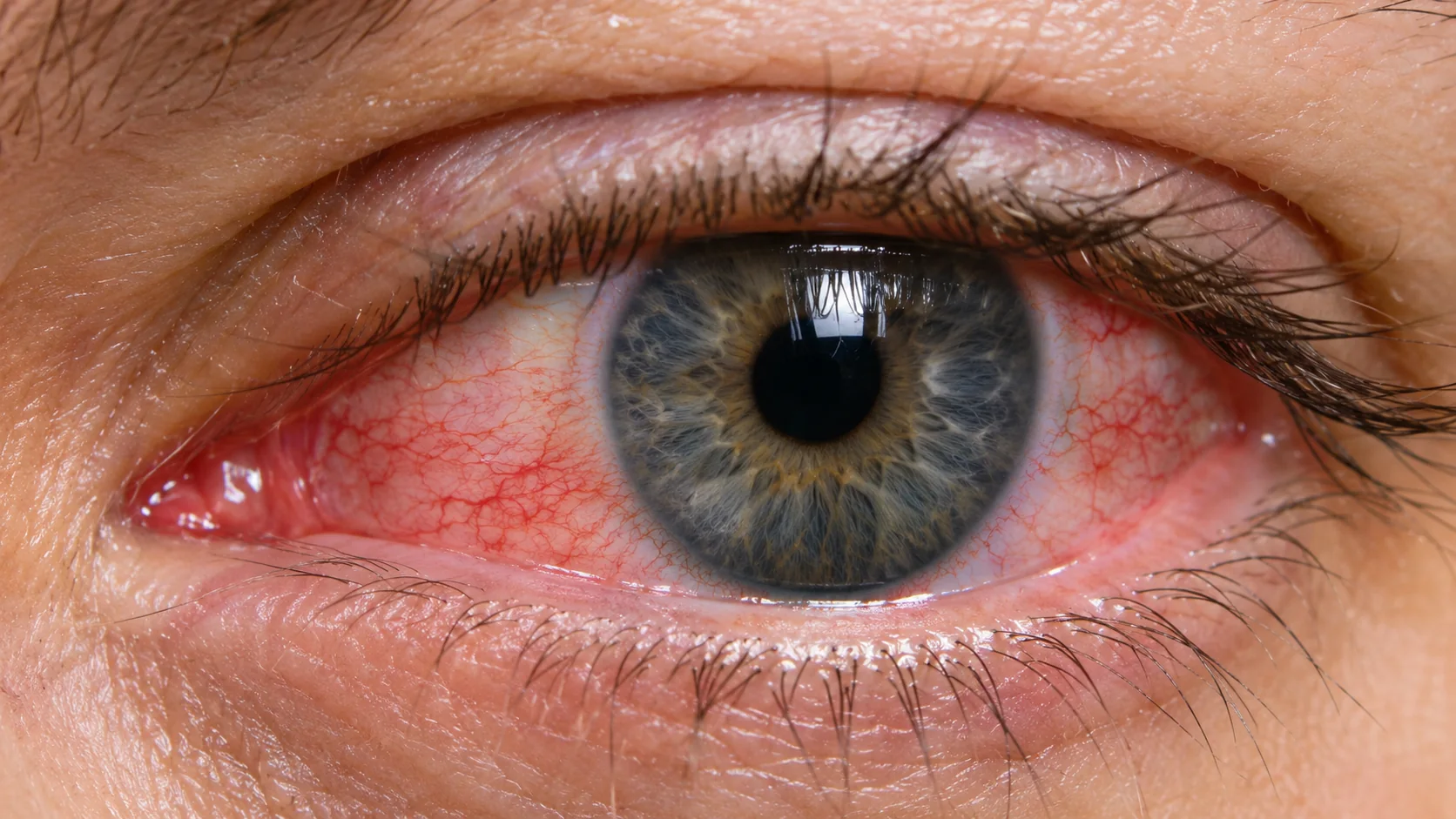
A red eye is a symptom, not a diagnosis. The white of the eye may look pink, generally bloodshot or marked by one sharply defined red patch. Many causes are minor, but a bloodshot eye with pain, light sensitivity or a change in sight can need urgent assessment.
What can cause red eye?
Redness usually happens when small blood vessels on the surface of the eye become more visible or widen. Common causes of red eye and bloodshot eyes include:
- Conjunctivitis: inflammation or infection of the thin membrane over the white of the eye and inside the eyelids. It can make the eye look red and feel gritty, itchy or sticky.
- Dryness or irritation: dry eyes, smoke, dust, wind or rubbing can leave the eye sore or bloodshot.
- Allergy: itching and watering can occur along with redness, often in both eyes.
- Blepharitis or eyelid problems: inflammation around the eyelid edges or lashes can irritate the eye.
- A small surface blood vessel bleed: a bright red patch on the white of the eye may be a subconjunctival haemorrhage.
Less common but more serious causes include inflammation inside the eye, a corneal problem, acute glaucoma, an injury or an infection. The appearance alone cannot reliably distinguish these causes, so do not try to diagnose a red eye from a photo or search result.
Why is my eyeball red or bloodshot?
If the whole eyeball looks red, this may be due to irritation, dryness, allergy or conjunctivitis. A bloodshot eyeball can also appear as a clearly outlined patch of blood on the white part of the eye. This is often painless and does not usually affect vision, but symptoms and the circumstances still matter.
A red patch that appeared suddenly can be alarming. Moorfields Eye Hospital describes a subconjunctival haemorrhage as bleeding under the clear surface layer over the white of the eye. It commonly settles without specific treatment over about a week or two. If it keeps happening, follows an injury, is painful or affects your sight, seek professional advice.
Read more in the Moorfields guide to subconjunctival haemorrhage.
Bloodshot eye with pain: when to get urgent help
A bloodshot eye with pain should be taken seriously, especially when the pain is severe or comes with other symptoms. Get urgent medical advice if your eye is very painful and red, or if you have pain with sensitivity to light or blurred vision. NHS guidance advises contacting NHS 111, a GP or an optician for urgent help in these situations.
Go to A&E or call 999 for immediate help if a red eye is accompanied by sudden loss or change of vision, severe headache with nausea, a very dark red eye, a chemical injury, a serious injury or something stuck in the eye, or one pupil becoming larger than the other. Do not drive yourself if you need emergency care.
See the NHS red eye guidance for current advice on urgent symptoms. If you are unsure how serious the symptoms are, contact NHS 111 rather than waiting for a routine appointment.
What does red eye treatment involve?
There is no single red eye treatment because care depends on the cause. Mild conjunctivitis, allergy, dryness, an eyelid problem and a surface injury are managed differently. Some cases improve without prescription treatment, while others need clinician assessment and specific care. Antibiotic drops are not appropriate for every red eye and will not help an allergy or viral cause.
For a mild red eye without pain or vision changes, try not to rub or touch it and ask a pharmacist or eye care professional what is suitable. If redness does not improve, keeps returning, has sticky discharge, or you are worried, arrange advice from a GP or optician. Do not use someone else’s eye drops or leftover prescription medicine.
If a red eye is painful, sudden or affecting your vision, use the urgent care guidance above instead of trying home treatment first.
When should an optician check a red eye?
An optician can assess many common eye symptoms and help decide whether you need routine advice, prompt medical care or referral to an ophthalmologist. An examination may include checking your vision and looking at the eye’s surface and eyelids. The exact assessment depends on your symptoms and findings.
At Specialeyes Eyecare, our team provides eye examinations in Shepherds Bush and can guide you to appropriate care if a red eye needs further medical assessment. If symptoms meet an emergency warning sign, contact NHS 111 or seek emergency care rather than waiting for an optician appointment.
Frequently asked questions about red eye
What is the most common cause of bloodshot eyes?
There are several common causes, including conjunctivitis, dryness, irritation, allergy and a small surface blood vessel bleed. The likely cause depends on symptoms such as pain, itch, discharge and changes to vision.
Can a bloodshot eyeball clear up on its own?
Some mild causes improve on their own. A painless red patch on the white of the eye caused by a subconjunctival haemorrhage often fades over a week or two. Pain, injury, repeated bleeding or changes in sight should be assessed.
Does every red eye need antibiotic drops?
No. Redness has different causes, and antibiotics only help certain bacterial infections. Viral or allergy related redness will not improve with antibiotics. Ask a healthcare professional or pharmacist for advice about treatment.
Is a red eye with pain an emergency?
Severe pain, light sensitivity or blurred vision with a red eye needs urgent assessment. Sudden vision loss, severe headache with nausea, a chemical injury or a serious eye injury requires emergency help.
Eye care in Shepherds Bush, West London
Specialeyes Eyecare is at 128 Uxbridge Road, Shepherds Bush, London W12 8AA. For non emergency eye care advice or to arrange an examination, call 020 8743 7552 or visit our page about eye tests in Shepherds Bush.
Clinical review
Clinically reviewed by: Hayder Ali, Qualified Optometrist
Last clinically reviewed:
Further clinical reading
For additional patient information and clinical guidance: